Boat and Yacht Insurance on Long Island Sound: A Connecticut Owner’s Guide
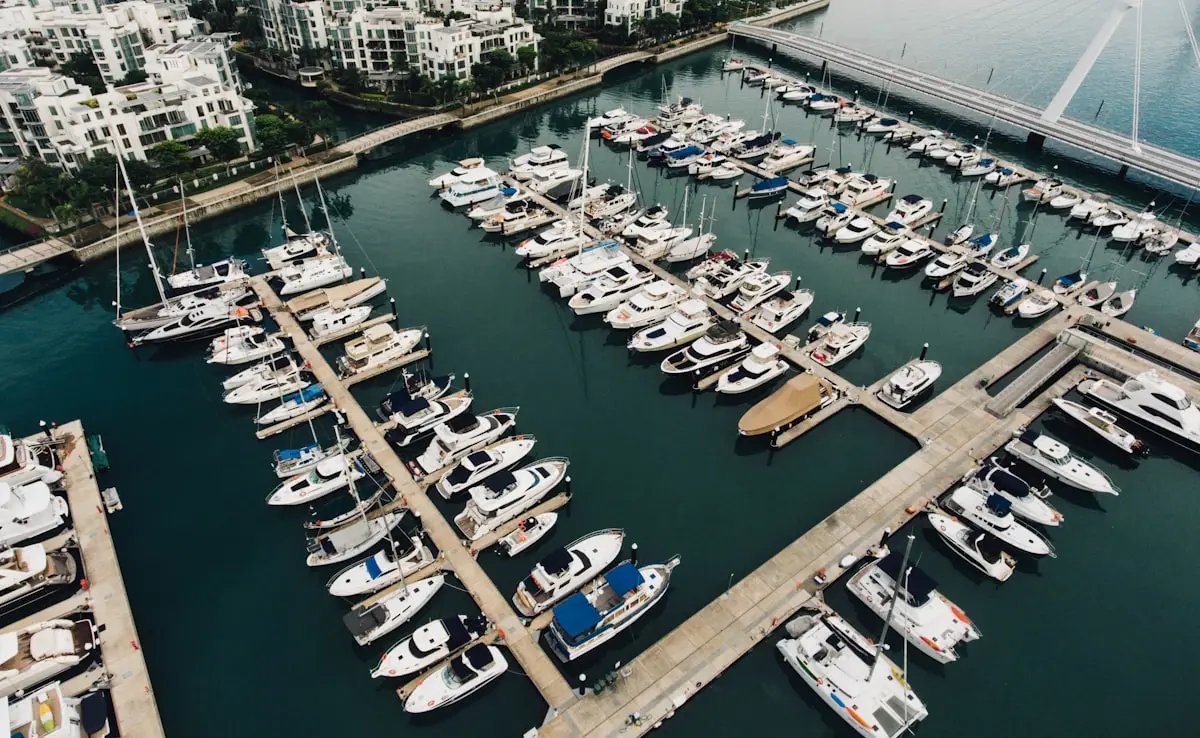
Homeowners watercraft coverage stops well short of a real boat. Here is how hull valuation, navigational limits, hurricane haul-out, fuel spill liability and wreck removal actually work on Long Island Sound.
Why Long Island Sound Deserves Its Own Insurance Conversation
A center console that trailers home each night and a fifty-foot cruiser that stays wet from spring launch to fall haul-out share a body of water and nothing else. Yet owners of both often rely on the same assumption: that the boat is "on the house policy," or that the marina "has insurance." Neither survives a real loss. What follows are the decisions that determine whether a Sound-based vessel is actually protected.
Homeowners Watercraft Coverage: Adequate for a Dinghy, Not for a Boat
Nearly every homeowners policy includes some watercraft coverage. Very little of it is meaningful once you move past a small outboard, because two limitations apply at once.
- A physical damage sublimit. Watercraft, trailers, motors and equipment are usually capped under a special limit that is a small fraction of the policy's contents coverage — commonly a low four-figure amount. That is built for a kayak, not for a hull with a serious engine package.
- Liability restricted by size and power. Homeowners liability commonly extends only to watercraft below stated length and engine-power thresholds. Exceed the threshold and the liability grant simply does not apply. Cutoffs vary by carrier and policy form, so read yours rather than assuming.
The practical rule: if the boat is meaningfully powered, meaningfully valuable, or kept in a slip or on a mooring, it belongs on a dedicated boat and yacht policy — which also brings coverages the homeowners form never contemplated: salvage and towing, pollution liability, wreck removal, personal effects aboard, and the tender.
Agreed Value vs. Actual Cash Value on the Hull
This line item does more to determine a total-loss outcome than anything else on the application.
An agreed value policy fixes the payable amount for a total loss when the policy is written. If the vessel is a constructive total loss, the carrier pays that number without arguing depreciation or comparables. Each renewal is a chance to revisit the figure, which matters in both directions given how sharply boat values have moved. An actual cash value policy instead pays replacement cost less depreciation, determined after the loss — often defensible on an older boat, often disappointing on a newer or heavily refit one, with the negotiation happening at the worst possible moment.
Two nuances owners miss. First, many agreed value policies still apply depreciation to specific components on a partial loss — canvas, sails, outboards, sometimes electronics — so agreed value does not mean new-for-old on every claim. Second, appetite varies by carrier and vessel age, and older vessels frequently require a condition-and-value survey whose recommendations may become conditions of coverage.
Navigational Limits: The Territory Clause That Follows You
Every marine policy defines where the vessel is covered, and it does so geographically — a coastal band, a distance offshore, sometimes named waters — rather than by state line. A run from Norwalk across to Long Island, or east toward Rhode Island, is typically inside the territory of a Sound-based policy. The problems start at the edges:
- Distance offshore. Many policies restrict operation beyond a set number of miles from the coast, which can put canyon runs and offshore fishing outside a policy written for inshore use.
- Seasonal and southern cruising. Taking the boat south for the winter, into the hurricane belt, or to the Bahamas usually requires an extension or a specifically written itinerary. Canadian cruising is handled the same way.
- Lay-up periods. Northeast policies frequently contemplate a winter lay-up when the vessel is out of commission. Operating during a declared lay-up, or leaving a vessel afloat when the policy assumed a haul-out, can create a dispute over a freeze or ice claim.
A call before departure that adds an endorsement is inexpensive. A grounding outside the navigational limits is not. Owners in shoreline towns like Old Saybrook who run east to Block Island and Newport should confirm the territory language covers the entire season, delivery legs included.
Hurricane Haul-Out Coverage
Connecticut sits at the top of a funnel: the Sound's geometry can amplify surge, and boats left in slips during a named storm are among the most predictable losses on the coast. Many marine policies include a named-storm haul-out benefit — when a hurricane watch or warning is issued for your area, the carrier reimburses part of the cost of hauling, moving to a hurricane hole, or otherwise protecting the vessel. Market practice commonly runs to roughly half the cost up to a capped amount, but the percentage, the cap and the trigger vary meaningfully between carriers. Worth knowing in June, not in the hours before landfall when every yard is booked.
Watch two related terms: some policies apply a separate percentage-based deductible to named-storm damage instead of the flat deductible, and some require a written storm plan or assume the vessel is hauled by a stated date. Storage and haul-out agreements, meanwhile, are drafted to protect the yard.
Fuel Spill Liability and Wreck Removal: The Two Big Ones
Fuel and pollution liability. Federal law imposes strict liability on vessel owners for discharges into navigable waters — you can owe cleanup costs without anyone proving negligence. A boat leaking diesel into a marina basin triggers a response involving the Coast Guard and state environmental authorities, and the containment and remediation bill bears no relationship to what the boat was worth. Marine policies commonly provide a defined pollution liability limit; homeowners liability will not respond at all.
Wreck removal. If your vessel sinks in a channel, a fairway or a slip, you can be legally compelled to raise and dispose of it — divers, cranes or barges, environmental controls, disposal fees. It is entirely possible to owe more to remove a boat than it was insured for, and wreck removal is frequently a separate limit rather than an extension of the hull limit. Confirm whether removal coverage sits in addition to hull value, whether it applies only when removal is legally required, and whether the limit fits where you keep the vessel.
Coordinate marine liability with the rest of the household's liability program. Confirm your personal umbrella policy actually sits above the boat — many umbrellas exclude watercraft above certain lengths or horsepower unless the vessel is scheduled and the underlying marine limit meets the umbrella's requirement.
Uninsured Boaters, State Rules and Marina Contracts
Unlike automobiles, recreational vessels are not subject to a broad, universally enforced liability-insurance mandate, so a meaningful share of the boats on the Sound on any summer Saturday carry no liability coverage at all. Uninsured boater coverage responds to bodily injury caused by an at-fault operator with no coverage or inadequate limits. It is inexpensive for what it does and routinely overlooked. Ask for it by name.
Ready to Secure Your Coverage?
Get personalized insurance recommendations from our expert agents. Schedule your consultation today.
📅 Schedule a ConsultationConnecticut requires registration for most motorized vessels and operator safety certification for those who run them; requirements change and specifics depend on the vessel, so confirm your own obligations directly with the state. State rules, though, are rarely what sets your insurance limits. The binding requirements usually come from two private sources:
- Marina and yacht club slip agreements, which routinely require a minimum liability limit, name the marina as an additional insured, request a waiver of subrogation, and include hold-harmless language shifting liability to the boat owner. Send the agreement to your agent before you sign it — the insurance article is negotiable more often than owners assume, and the certificate has to match what the contract demands.
- Lenders, which typically require hull coverage naming the lender as loss payee, with limits tied to the loan balance rather than to what you would want to recover.
One related item: if you employ a paid captain or delivery crew, raise it before the season. Crew injuries can fall under federal maritime remedies rather than state workers' compensation.
A Twenty-Minute Annual Review
- Confirm the hull valuation basis and update the insured amount to current market.
- Read the navigational limits and lay-up warranty against your season plan.
- Verify the haul-out benefit, the windstorm deductible, and the pollution and wreck removal limits.
- Add uninsured boater coverage and match the policy to every contract you have signed.
Terms and appetite differ substantially between marine carriers, and the right structure depends on the vessel and how it is used. Contact New England Insurance to have your policy read against your actual boating season, before a storm forecast makes it urgent.
Start Your Coverage Review
Share your risk picture and a licensed advisor will design coverage tailored to your specific needs.