Commercial Auto Insurance for Connecticut Businesses: When a Personal Policy Stops Responding
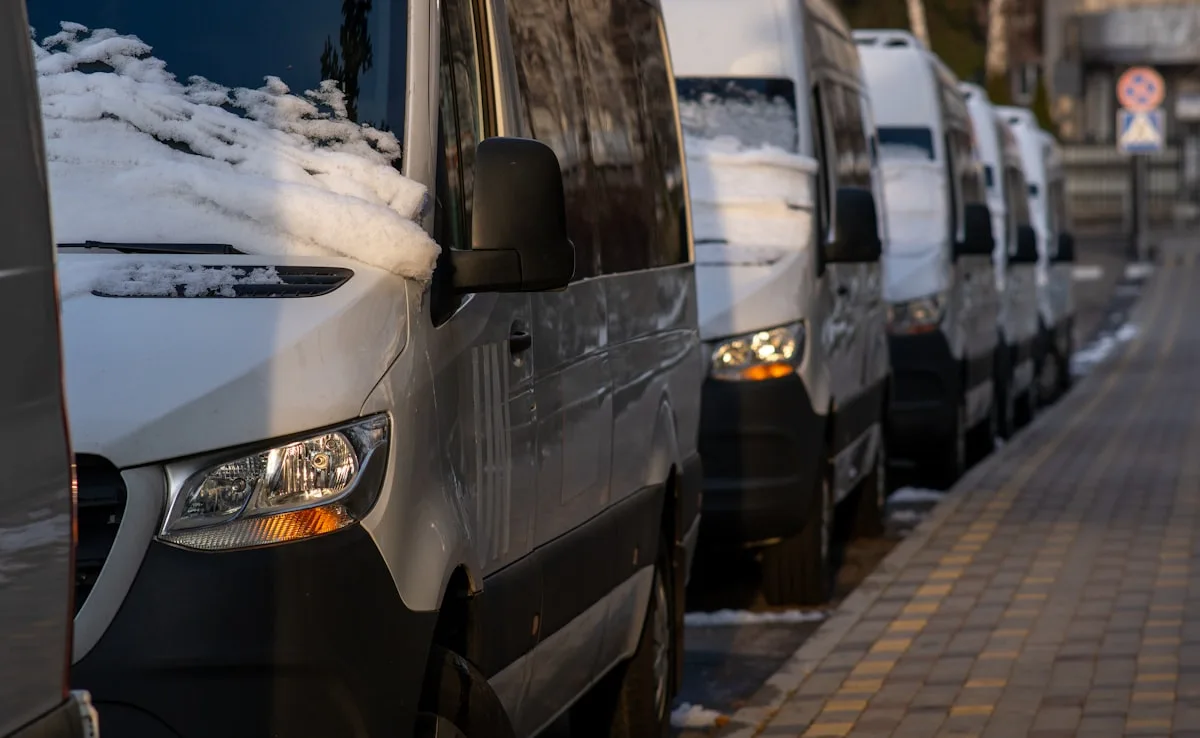
Owned, hired and non-owned auto coverage explained in plain English — plus vehicle titling, driver screening, cargo and equipment, and how commercial auto sits beneath an umbrella for Connecticut businesses.
The Policy That Was Never Meant to Be There
A Connecticut business owner buys a van, adds it to the policy covering the family sedan, and thinks nothing of it for four years. Then a driver rear-ends someone during a delivery and the carrier begins asking how the vehicle is used and whose name is on the title. That is where many small businesses learn a personal auto policy was never built to carry a commercial exposure.
Not every business vehicle belongs on a commercial policy. But that line is drawn by policy language and by facts an adjuster can verify, not by what the owner assumed at purchase — and it is far cheaper to find now than after a loss.
When a Personal Auto Policy Stops Responding
Personal auto forms tolerate incidental business use, such as a consultant driving to a client meeting. What they commonly do not contemplate:
- Vehicles titled or registered to the business. Many personal forms are written for individual named insureds. A vehicle owned by an LLC often does not fit, and even where a carrier accepts it, the entity may not be an insured for liability.
- Delivery and for-hire use. Carrying persons or property for a fee is excluded or heavily restricted on most personal forms.
- Employees behind the wheel. A personal policy insures you, household family members, and permissive users. It is not designed to protect a business sued because its employee was driving.
- Vehicle type. Box trucks, larger commercial vehicles, and vehicles with permanently attached equipment such as lifts, tanks, or utility bodies typically sit outside personal auto eligibility.
- The business as co-defendant. Plaintiffs routinely name the company alongside the driver, alleging negligent hiring, negligent supervision, negligent entrustment, or vicarious liability for an employee acting in the scope of employment. Your personal policy does not list the company as an insured, so there may be no defense for the entity at all.
If your driving is genuinely personal and occasional, a well-structured personal auto policy may be the right home for it. The moment a business owns a vehicle or directs employees to drive, the analysis changes.
The Symbol Structure, in Plain English
Commercial auto is not granted vehicle-by-vehicle the way a personal policy is. On the standard business auto form many carriers use, each coverage is followed by a number called a symbol that defines the category of vehicles it applies to. Get the symbols wrong and a policy can look complete on the declarations page while a whole class of vehicles goes uninsured.
- Any auto (commonly symbol 1). The broadest liability designation — vehicles you own, hire, borrow, or do not own but use in your business. It picks up newly acquired vehicles automatically, which makes it the cleanest liability structure for businesses that qualify.
- Owned or specifically described autos (commonly symbols 2 through 7). Coverage applies only to scheduled vehicles. Physical damage is almost always written this way, because a carrier only pays to repair a vehicle it has rated — which is why an unreported new truck is a real problem.
- Hired autos (commonly symbol 8). Vehicles you rent, lease, or borrow from someone other than an employee.
- Non-owned autos (commonly symbol 9). Vehicles you neither own nor hire but use in your business — most importantly, employees' personal cars driven on company errands.
Availability and wording vary by carrier and form edition, so read your declarations page and confirm which numbers appear beside which coverages.
Hired and Non-Owned: The Coverage Nobody Thinks They Need
Ask a business owner whether employees ever drive their own cars for work and the answer is usually no. Ask whether anyone picks up lunch for a meeting, drops a deposit at the bank, runs a part to a jobsite, or stops at a supplier on the way in, and the answer changes.
Every one of those errands is business use of a non-owned auto. If the employee causes a serious injury, their personal policy responds first, up to whatever limit they happened to buy — often a modest one. When it is exhausted, the plaintiff looks for the next defendant, and that is the company that sent them. Hired and non-owned auto liability, commonly called HNOA, answers for the business.
- It is excess, not primary. It sits above the employee's own policy, does not cure an employee driving with minimum limits, and does not repair their vehicle.
- It can live in more than one place. Some carriers endorse it onto a business owners or general liability policy; others write it on the commercial auto policy. Businesses that own no vehicles at all frequently still need it.
Titling, For-Hire Use, and Motor Carrier Obligations
Titling should match the policy. A vehicle titled to the business belongs on a commercial policy naming that business; one titled to an owner personally but used almost entirely for the business creates a mismatch that surfaces at claim time. Where ownership and use genuinely straddle both worlds, say so rather than quietly choosing a side — drive-other-car and individual named insured endorsements can restore personal-style protections for the owner and family, but they have to be requested.
Some operations carry obligations beyond the policy. Businesses transporting property or passengers for compensation, or operating larger vehicles across state lines, may fall under federal motor carrier registration and financial responsibility requirements, which can include filing evidence of insurance with a regulator. Whether that applies turns on vehicle weight, cargo, passenger count, and how the operation is classified — thresholds set by regulation, not by your policy. Confirm your status with the appropriate regulator or with counsel, then make sure the filings match.
Drivers, MVRs, and Why Carriers Care
Commercial auto underwriting is largely driver underwriting. Carriers commonly pull motor vehicle records on listed drivers at new business and periodically after, and one serious violation can affect the pricing or eligibility of an entire fleet. A defensible driver program is straightforward:
- Pull an MVR before anyone drives on company business, and re-pull annually.
- Write down what disqualifies a driver, and apply it consistently.
- Keep the driver list current — adding drivers only at renewal is how surprises happen.
- Maintain a written policy on personal use of company vehicles, passengers, and phone use while driving.
Ready to Secure Your Coverage?
Get personalized insurance recommendations from our expert agents. Schedule your consultation today.
📅 Schedule a ConsultationInjuries to your own employees while driving are a workers' compensation matter rather than an auto liability matter, which is one more reason to review Connecticut workers' compensation coverage alongside the auto program.
Cargo, Tools, and Equipment
Commercial auto physical damage insures the vehicle. It generally does not insure what you put in it. Property in transit belongs on inland marine forms:
- Motor truck cargo covers property of others that you haul.
- Contractors equipment or tool floaters cover your own tools and machinery in the truck, at a jobsite, or in transit. Theft from a locked van in Bridgeport is a property claim, not an auto claim.
- Permanently attached equipment such as lift gates, cranes, and refrigeration units may need to be specifically valued so the vehicle limit reflects real replacement cost.
- Rental reimbursement. If a vehicle out of service stops revenue, ask what the policy pays.
Where the Umbrella Sits
Auto claims are among the most severe liability exposures most businesses face: a vehicle can injure several people at once, and juries understand driving. A commercial umbrella sits above commercial auto, general liability, and employers liability, adding limit across all three. Two details matter: the umbrella specifies the underlying limits it requires, and letting one drop below that schedule can leave a gap you pay for personally; and umbrellas do not automatically follow hired and non-owned auto liability unless it is scheduled underneath.
What to Do Next
Before your next renewal, work through this list. Most of it takes an afternoon.
- Inventory every vehicle — who holds title, who registered it, who drives it, what it is used for — and compare that against your declarations page.
- Read the symbols beside each coverage, and confirm hired and non-owned liability is actually there rather than assumed.
- List everyone who drives for the business, including people using their own cars for errands, and ask those employees annually for proof of insurance.
- Pull MVRs and put an annual date on the calendar.
- Total the tools, equipment, and cargo traveling in your vehicles, and confirm where that property is insured.
- Ask for the schedule of underlying insurance on your umbrella and verify the limits still match.
- Flag any for-hire, interstate, or heavy-vehicle activity and confirm registration and filing obligations with the appropriate regulator or counsel.
Terms, symbol availability, and eligibility vary by carrier, and the right structure depends on what you drive, who drives it, and what you haul. If that inventory turns up anything you cannot match to a line on your policy, contact New England Insurance and we will review the vehicles, the drivers, and the umbrella above them as one program rather than as policies that happen to renew in the same year.
Start Your Coverage Review
Share your risk picture and a licensed advisor will design coverage tailored to your specific needs.