Do I Need Flood Insurance in Connecticut? Flood Zones, NFIP Limits, and Excess Coverage
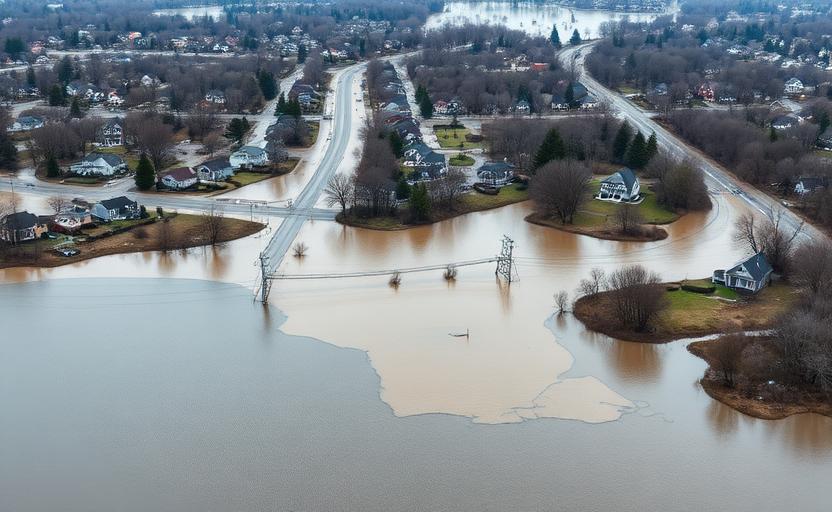
Standard homeowners policies never cover flood. Here is how to look up your own parcel's FEMA zone, where NFIP limits run out on a higher-value Connecticut home, and how excess and private flood fill the gap.
The Short Answer: Your Homeowners Policy Will Never Pay for Flood
Every standard homeowners policy written in Connecticut excludes flood. That is true of the common HO-3 and HO-5 forms and of the high-value forms used on larger homes. This is not a gap that varies by carrier. The exclusion is structural, and it applies to surface water, storm surge, tidal water, overflow of a body of water, and mudflow, whether the water arrives from Long Island Sound or from a brook that jumped its banks three miles inland.
The distinction that catches homeowners off guard is where the water came from, not how much damage it did. A burst supply line that ruins a finished lower level is a homeowners claim. Four inches of rain that overwhelms a culvert and pushes the same volume of water through the same room is a flood claim, and without a separate flood policy it is uninsured. Sewer and drain backup is a third category, usually available as a modest endorsement, capped well below the cost of a serious loss, and not a substitute for flood coverage.
How to Look Up Your Own Property's Flood Zone
Do not rely on what a neighbor or a listing agent told you. Flood zone boundaries change street by street, and in shoreline neighborhoods lot by lot. Look up your own parcel:
- FEMA's Flood Map Service Center lets you search by address and view the effective Flood Insurance Rate Map panel covering your property.
- Your town's land use, engineering, or assessor's office maintains local floodplain records, and most Connecticut municipalities have a floodplain administrator who can interpret the panel.
- An elevation certificate, if one exists, tells you how your lowest floor sits relative to the base flood elevation. Older homes often lack one, and having a surveyor prepare it can change how a property is rated or support a map amendment.
The zone letters are worth knowing, though you must confirm your own designation. Zones beginning with A are Special Flood Hazard Areas, where FEMA models roughly a one percent annual chance of flooding. Zones beginning with V are coastal high hazard areas where wave action is expected on top of surge, a materially different underwriting picture. Zone X covers moderate and minimal hazard areas.
Zone X Does Not Mean "No Risk"
Flood maps are drawn around modeled river and coastal behavior. They are not a forecast of where rainfall will pool, and plenty of Connecticut losses happen on parcels mapped outside the high-risk zones. "My lender does not require it" is a poor reason to skip coverage: outside those zones flood insurance is optional and priced accordingly, and for a home with a finished lower level it is often the best value on the table.
Two Different Flood Problems in One Small State
Coastal surge along Long Island Sound
Tropical systems and nor'easters push water up the Sound, and the western shoreline sits at the narrow end of that funnel. Surge damage is driven by the storm's track and intensity but also by timing against the tide cycle. Just as important, shoreline flooding is frequently a back-door problem: water moves up tidal creeks and marsh systems into streets that are not themselves on the water. Homes in coastal high hazard areas face wave action as well as depth, which affects construction requirements and carrier appetite. If you own along the shoreline in a town like Westport, the parcel-level designation matters far more than the town's reputation.
Riverine and rainfall flooding inland
The Housatonic, Naugatuck, Connecticut, Farmington, and Quinnipiac corridors have long flood histories, and Connecticut's catastrophic 1955 flooding in the Naugatuck Valley remains the reference event for what a stalled rainfall system can do to a river town. Flash flooding on small watersheds is the more common modern pattern: several inches of rain in a few hours on steep terrain, far from any coastline. Inland homeowners are the least likely to carry flood coverage and the most surprised by the exclusion.
What the NFIP Actually Pays, and Where It Stops
The National Flood Insurance Program is the backbone of the market, and for many Connecticut homes it is adequate. For higher-value homes it is a floor, not a plan. Its structural limitations:
- Coverage caps. For one-to-four family residential buildings, NFIP building coverage is capped at $250,000 and contents at $100,000. Those are program maximums, not underwriting judgments about your home.
- Contents settle on an actual cash value basis, meaning depreciation is applied. Building coverage can be replacement cost for a primary residence insured to a sufficient percentage of replacement value, but the contents treatment surprises people.
- Below-grade areas are severely restricted. The form covers certain building elements and mechanicals below grade but broadly excludes finished walls, floor coverings, and personal property stored there. A finished lower level is where much of the money is, and exactly where the form is thinnest.
- There is no additional living expense coverage. If your home is uninhabitable for months, the NFIP policy does not fund the rental you move into.
FEMA's current rating methodology prices each property on its own characteristics, including distance to water, elevation, and rebuilding cost, rather than on the zone alone. Two homes on the same street can rate very differently, so the only reliable way to know your cost is to have the property quoted. We do not publish premium estimates; any number not tied to your parcel is guesswork.
Excess Flood and Private Flood for Higher-Value Homes
If your home would cost well more than $250,000 to rebuild, and most Fairfield County homes would, the NFIP limit is a deductible-sized layer against a total loss. Two structures fill that gap:
- Excess flood sits on top of an underlying NFIP policy and extends the building and contents limits, commonly on terms that broadly track the underlying form. It requires the NFIP layer to be in place and maintained.
- Private primary flood, written outside the federal program, can offer higher limits from the first dollar and frequently broader terms, including additional living expense, replacement cost on contents, and better treatment of finished below-grade space. Terms and appetite vary meaningfully by carrier and property, so this is a market to be shopped rather than assumed.
Federal regulators require lenders to accept qualifying private flood policies where coverage is mandatory, though some servicers need to be walked through it. If you are replacing an NFIP policy with a private one on a mortgaged property, confirm acceptance before you cancel anything.
The Waiting Period Is the Reason to Act Now
NFIP policies carry a standard 30-day waiting period between purchase and the start of coverage. Narrow exceptions apply, most notably when coverage is required at a loan closing and in certain map-revision situations. Private carriers commonly use shorter waiting periods, but the length varies and should never be assumed.
Ready to Secure Your Coverage?
Get personalized insurance recommendations from our expert agents. Schedule your consultation today.
📅 Schedule a ConsultationCarriers also impose binding moratoriums once a named storm is in the forecast. Flood coverage is arranged in a quiet week, not when a system is three days off the coast. Letting an existing policy lapse can also restart the clock and forfeit rating benefits tied to continuous coverage.
When Your Lender Requires It
Federally regulated and federally insured lenders must mandate flood insurance on structures in a Special Flood Hazard Area within a participating community. The required amount is generally the lesser of the outstanding loan balance, the insurable value of the building, or the maximum limit available under the NFIP. Note what that formula does: it protects the lender's collateral position, not your equity. A borrower carrying only the mandated minimum has satisfied the bank and left the family exposed.
Requirements also appear mid-loan. When FEMA revises a map panel and a property is newly mapped into a high-risk zone, servicers will require coverage, and if you do not place it yourself they will force-place a policy that is typically costlier and narrower.
A Practical Next Step
Pull your parcel on FEMA's map service center, find out whether an elevation certificate exists, and inventory what sits below grade. Then review flood alongside the rest of the property program, since deductibles, wind coverage, and homeowners coverage all interact during a coastal storm. Our team reviews Connecticut flood insurance across NFIP, excess, and private market options statewide. Contact New England Insurance to have your exposure reviewed before the next storm season, not during it.
Start Your Coverage Review
Share your risk picture and a licensed advisor will design coverage tailored to your specific needs.