High-Value Home Insurance in Connecticut: What Standard Policies Miss
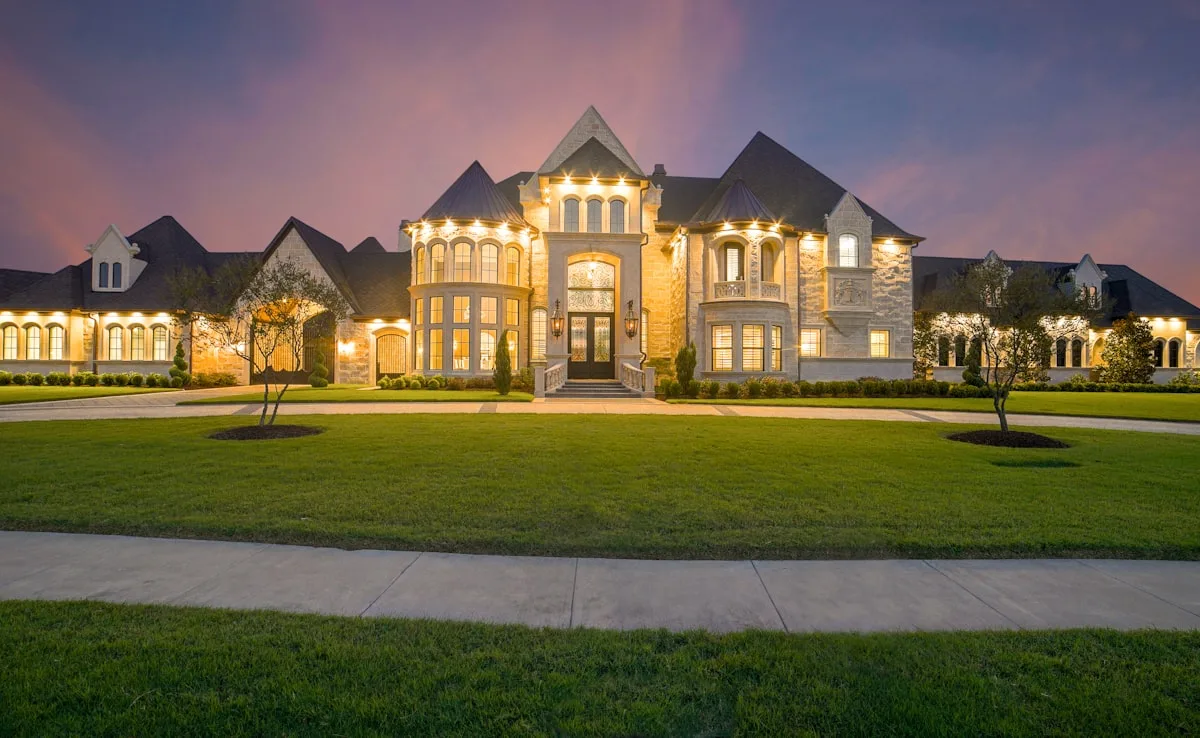
Standard homeowners forms are built for typical houses. Here is how replacement cost, ordinance or law, cash settlement, and named-storm deductibles work on a Connecticut high-value home.
Why a Standard Homeowners Form Struggles With a Distinctive Home
Most homeowners policies written in Connecticut rest on one assumption: that a house is described well enough by square footage, year built, construction class, and a few interior-finish checkboxes. An estimator turns those inputs into a dwelling limit, and for a builder-grade colonial it lands close enough.
It stops working on the housing stock that defines much of Fairfield County, the shoreline, and the Litchfield hills. A 1920s stone-and-slate house, an antique center-chimney colonial with hand-hewn framing, a shingle-style waterfront property with custom millwork throughout — none of these rebuild at the per-square-foot cost an estimator assumes. Plaster, leaded glass, quartersawn oak, imported stone, and slate and copper roofing are priced by specialty trades, and those trades are the scarce resource after a storm pushes hundreds of claims into one labor market.
The mismatch surfaces in three places: a dwelling limit set too low, personal property sublimits written for the mass market rather than a high-value home, and claims handling built for volume when a distinctive rebuild needs an adjuster who can evaluate custom work.
Actual Cash Value, Replacement Cost, and Guaranteed Replacement Cost
These phrases decide what a claim actually pays, and they are not interchangeable.
- Actual cash value (ACV) pays replacement cost minus depreciation. A twenty-year-old slate roof settled on ACV pays a fraction of what a new one costs.
- Replacement cost (RC) pays to repair or rebuild with like kind and quality, with no depreciation haircut — but never more than the dwelling limit. RC coverage on an inadequate limit still leaves you short.
- Extended replacement cost adds a stated cushion above the dwelling limit, usually a percentage. The size of that cushion is written in your policy; read it rather than assuming.
- Guaranteed replacement cost pays the actual cost to rebuild the home as it was, even beyond the limit. It is the strongest position available and it is conditional — carriers generally require you to insure to their valuation, report renovations, and keep the appraisal current. Miss those conditions and the guarantee can be lost.
One more detail: a dwelling insured for replacement cost can still carry endorsements that settle specific components differently. Roof-surfacing schedules that depreciate by age, and cosmetic damage exclusions, quietly convert the most exposed part of the house to an ACV settlement. Read the endorsement list on your declarations, not just the coverage summary.
Why a Market Appraisal Is the Wrong Number
Homeowners reach for the number they know — what the house is worth, or what they paid. Neither is the right input. Market value includes land, location, school district, water frontage, and buyer demand. None of that burns. Insurance is concerned with reconstructing the structure at today's labor and material prices, on that site, under today's code. Where land carries most of the price, market value overstates the rebuild; for an elaborate home in a softer submarket, the rebuild can exceed what the property would sell for. The mortgage balance is equally wrong: a loan amount says nothing about construction costs.
The right instrument is a replacement cost appraisal that inventories what the house is actually made of, which is why high-value carriers start with an in-person inspection rather than an algorithm. Refresh that valuation after any significant renovation.
Ordinance or Law Coverage on Older Connecticut Housing Stock
Connecticut has some of the oldest housing in the country, and much of it predates the code it would now have to satisfy. If a covered loss damages a substantial share of the structure, the building official will not let you rebuild what was there — reconstruction has to meet current requirements: updated electrical and egress, insulation and energy standards, structural connections, fire separation, and, in floodplain areas, elevation.
Standard policies exclude the cost of code compliance, then hand back a limited amount through an ordinance or law provision, often a modest percentage of the dwelling limit. Where compliance is the expensive part of the rebuild, that percentage becomes the binding constraint.
Three cost buckets forms treat differently
- The increased cost of construction to bring the repaired portion up to code.
- Demolition of the undamaged portion when the official requires the rest to come down.
- The lost value of that undamaged portion, which some forms address and others do not.
Ready to Secure Your Coverage?
Get personalized insurance recommendations from our expert agents. Schedule your consultation today.
📅 Schedule a ConsultationShoreline owners should pay particular attention. Communities in the federal flood program apply a substantial-damage standard, and when damage crosses that threshold — commonly measured against a share of the structure's value, with the local official making the call — the whole building can be required to come into compliance, elevation included. That call comes after the loss, which is the wrong time to learn the coverage is capped.
Cash Settlement: The Option Not to Rebuild
After a total loss, some families do not want to rebuild the same house on the same lot. Whether the policy allows that without penalty depends on its settlement language. On many standard forms, the replacement cost portion of a dwelling claim is payable only if you actually repair or replace; take the money and walk, and the settlement reverts to actual cash value. Many private-client forms offer a cash settlement option instead: you elect to take the dwelling limit, or an agreed figure, and rebuild elsewhere or not at all. Terms vary — some pay the full limit, others the lesser of the limit and the rebuild estimate, and some condition the option on the loss being total. It is a feature to shop for, not to discover later. See our Connecticut homeowners insurance page.
Named-Storm and Percentage Windstorm Deductibles Along the Shoreline
Coastal Connecticut policies commonly carry a separate hurricane or named-storm deductible expressed as a percentage of the dwelling limit rather than a flat dollar amount, and on a high limit that percentage is a large number that applies before the carrier pays anything. See our full explanation of the trigger, the percentage, and the 2,600-foot shoreline rule for the exact mechanics.
Wind and surge also settle under different policies. Wind-driven damage is a homeowners claim; storm surge is flood, excluded from every homeowners form and covered only under separate flood insurance. Because federal flood limits sit well below the rebuild cost of most high-value shoreline homes, an excess flood layer through the private market is usually the practical answer. Waterfront owners in towns such as Greenwich and Darien should review wind and flood together, since one storm can produce both claims and two deductibles.
What High-Value Carriers Do Differently
The difference between a mass-market and a private-client program is structural, not just a bigger limit:
- Appraisal-based valuation. Someone inspects the house and prices what is in it, which is what makes guaranteed or extended replacement cost sustainable.
- A single deductible for a single event. Many private-client programs apply one deductible when a storm damages the house, a vehicle, and scheduled property at once, rather than one per policy.
- Direct adjuster access. In-house adjusters with authority to decide, rather than a rotating queue, is what families notice most in a complicated rebuild.
- Broader loss of use. High-value forms often fund comparable housing for the time the rebuild actually takes, rather than capping living expense at a percentage.
- Higher built-in sublimits. Personal property categories start higher, and home, valuables, and excess liability are structured to fit together.
How to Review What You Have
Pull your declarations page and check, in order: the dwelling limit and how it was derived; whether valuation is replacement cost, extended, or guaranteed, and what conditions attach; the ordinance or law percentage; roof and cosmetic endorsements; the named-storm deductible and its trigger; and the sublimits for jewelry, art, and collections. Items above those sublimits belong on a schedule — see our guidance on insuring valuables in Connecticut. If your home is distinctive, historic, on the water, or simply expensive to reproduce, do that review before renewal rather than after a loss. Contact New England Insurance to walk through where your limits sit.
Start Your Coverage Review
Share your risk picture and a licensed advisor will design coverage tailored to your specific needs.