Home Renovations and Your Connecticut Insurance Policy
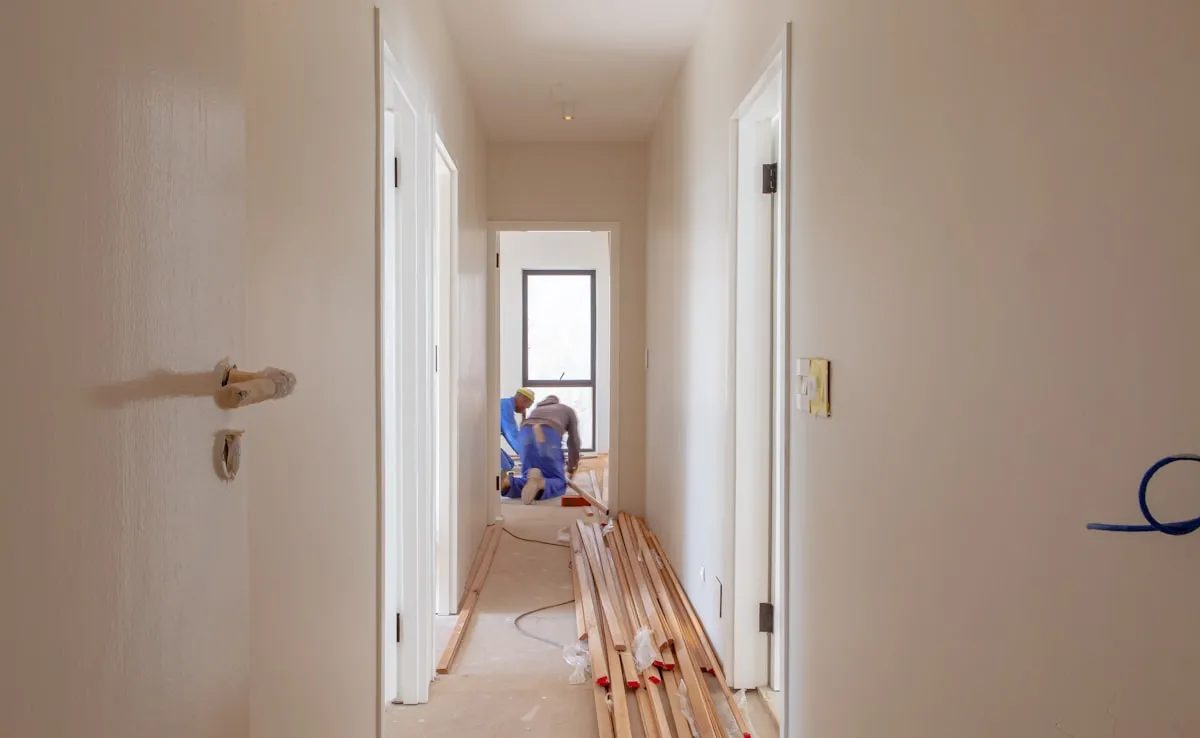
A major renovation changes your rebuild cost, your occupancy status and who is liable on site. What to report before work starts, who buys builders risk, what a certificate of insurance really proves, and what to fix when the job is done.
The Policy You Have Describes the House You Had
Every homeowners policy is priced against a description: square footage, construction class, year built, quality of finish. A renovation rewrites it. Add fifteen hundred square feet, rebuild a kitchen in stone and custom cabinetry, or replace the mechanicals, and the cost to rebuild from a slab moves — sometimes by more than the project cost, because reconstruction carries demolition, debris removal and code compliance a planned renovation does not.
If the dwelling limit does not move with it, you are underinsured on the part of the house you just invested in. That is the ordinary answer to "do I need to tell my insurance about a renovation." The better answer is that you tell them before the work starts, for three reasons.
Valuation. Extended and guaranteed replacement cost provisions are conditional. Carriers offering them commonly require that you insure to their valuation and report improvements, so a homeowner who quietly doubles the footprint can find the policy's strongest feature unavailable. Our guidance on Connecticut homeowners insurance covers how those tiers differ.
Underwriting. Major construction changes the risk while it is underway. Some carriers restrict coverages during the work, some require an endorsement, some want the project described before they will keep the risk on the same terms.
Occupancy. Which is where the real trouble lives.
The Vacancy Trap
The family moves out for a six-month gut renovation. Permits run long, a structural surprise appears, the cabinets are delayed. The house sits empty for the better part of a year, and a break-in happens somewhere in that stretch.
Standard homeowners forms suspend vandalism and malicious mischief coverage, and glass breakage coverage, once a dwelling has been vacant for more than a stated number of consecutive days immediately before the loss. Sixty consecutive days is the threshold in the widely used industry form. Those same forms then add an important sentence: a dwelling being constructed is not considered vacant.
That carve-out is real, and narrower than homeowners assume. It turns on the dwelling actually being under construction, not on a permit sitting in a drawer while the project waits on financing, and proprietary forms word vacancy differently. Describe the project and the move-out to your agent, and get the carrier's occupancy position in writing before the family leaves. Many carriers will issue a vacancy permit or a renovation endorsement when asked in advance.
An empty house is also an unmonitored one, and a supply line that lets go in February does not announce itself. Keep the heat on and monitored, keep the alarm reporting, and consider a water-flow sensor with an automatic shut-off valve.
Builders Risk: What It Covers and Who Buys It
Builders risk — also called course of construction — is property insurance on a project while work is in progress. It typically covers the structure plus the materials, fixtures and equipment intended to be installed, often including materials in transit and in temporary storage. It is property coverage only: not liability, and no warranty of workmanship.
Who buys it is a contract question that the contract should answer explicitly. Either the owner or the general contractor may carry it; what matters is that the interests line up:
- Named insureds. If the contractor buys it, the owner should be named as an insured, not merely mentioned; if the owner buys it, the contractor and major subs generally should be.
- Lender. A construction or renovation loan will require the lender as loss payee.
- Limit. It should reflect completed value, and the existing structure where the form covers it — not every form does, so confirm which policy carries it.
- Term. Schedules slip, and extensions must be requested before expiration, not after.
- Soft costs. Ask whether the policy funds additional living expense, loan interest and design costs during a delay.
- Perils and sublimits. Theft, water damage and windstorm are frequently sublimited. Read the schedule, not the summary.
Theft of Materials Is a Specific Gap
Standard homeowners forms cover materials and supplies located on or next to the premises used to construct, alter or repair the dwelling — and then the theft peril excludes theft in or to a dwelling under construction, or of materials and supplies for use in the construction, until the dwelling is finished and occupied. Read those together and the appliance package staged in the garage, the flooring stacked in the dining room, and the millwork delivered early can all sit outside your theft coverage while the job is open. Builders risk, or a contractor's installation floater, is where that belongs.
Certificates, Additional Insured Status, and Registration
Collect the paperwork before the first day of work: general liability, workers' compensation, commercial auto, and any excess layer.
A certificate of insurance is informational only. It is a snapshot of what a policy looked like the day it printed. It confers no rights, does not amend the policy, and does not by itself make you an additional insured — the certificate forms say so on their face. Additional insured status comes from an endorsement attached to the contractor's policy, and the forms differ: some cover ongoing operations only, others extend to completed operations. Ask for the endorsement, confirm it names you, and verify the dates cover the whole project.
Ready to Secure Your Coverage?
Get personalized insurance recommendations from our expert agents. Schedule your consultation today.
📅 Schedule a ConsultationSubcontractors are a separate question. A general contractor's certificate says nothing about the electrician, the roofer or the excavator. Ask how your contractor verifies subcontractor insurance and whether the subcontracts require what you were promised.
Connecticut registration. Home improvement contractors must be registered with the state Department of Consumer Protection, and you can verify a registration through the department's online license lookup before signing anything. The state's Home Improvement Guaranty Fund, which can help satisfy an unpaid court judgment against a contractor, is generally available only where the contractor was properly registered, and recovery from it is capped.
Why an Uninsured Contractor Becomes Your Problem
When the contractor has no coverage, the claim does not disappear — it looks for the next available policy, and that is yours. A worker who falls from staging, a neighbor whose wall is undermined by excavation, a fire traced to a temporary heater: with no contractor policy to respond, the injured party names the homeowner, and your homeowners liability defends a construction claim it was never priced to handle. Those forms also restrict coverage for injuries to people who qualify as your employees, and if you are directing the work or acting as your own general contractor, the question of who employed whom gets harder to answer.
Whether a workers' compensation obligation attaches to a homeowner in a given arrangement is a fact-specific legal question — ask your attorney, and meanwhile insist on a current workers' compensation certificate from anyone bringing labor onto the property. Owner-builders should raise the arrangement with their agent, because the exposure begins to resemble contractor and construction liability coverage. Tell your umbrella carrier as well.
When the Work Is Finished, Update the Policy
- Reset the dwelling limit to a current reconstruction figure reflecting what was actually built. Ask the carrier to re-run the valuation, or commission a replacement cost appraisal.
- Revisit ordinance or law coverage. Bringing part of the house to current code does not solve the older portions, and that percentage is often the binding constraint on an older Connecticut house.
- Raise contents and schedule new valuables. Art, a wine cellar, audiovisual equipment and rugs frequently push past personal property sublimits — see our guidance on insuring valuables in Connecticut.
- Add the new structures. Pools, pool houses, detached garages, generators and outbuildings affect the other structures limit and the liability picture.
- Check flood implications. In a mapped floodplain, an addition or substantial improvement can trigger compliance obligations.
- Document it. Photograph every room before you fill it, and keep permits, the certificate of occupancy, contracts and final plans in one off-site file.
What To Do Next
- Call your agent before demolition and describe the scope, budget and schedule.
- Get the carrier's occupancy position in writing if anyone is moving out.
- Settle in the contract who buys builders risk, the limit, who is named, and whether it covers the existing structure and stored materials.
- Collect liability, workers' compensation and auto certificates from the general contractor, and ask how subcontractors are verified.
- Request the additional insured endorsement itself, not just the certificate box.
- Verify the contractor's Connecticut registration through the Department of Consumer Protection lookup.
- Notify your umbrella carrier, then reset the dwelling limit and schedule new valuables after completion.
Renovations routinely run past a year and change a home's replacement cost substantially, and in towns like New Canaan the insurance conversation is usually the last one anyone has. It works better as the first. If you are planning work, or finished a project and never went back to the policy, contact New England Insurance for a review of where your limits and your contracts stand.
Start Your Coverage Review
Share your risk picture and a licensed advisor will design coverage tailored to your specific needs.