Insuring a Second Home or Shoreline Vacation Property in Connecticut
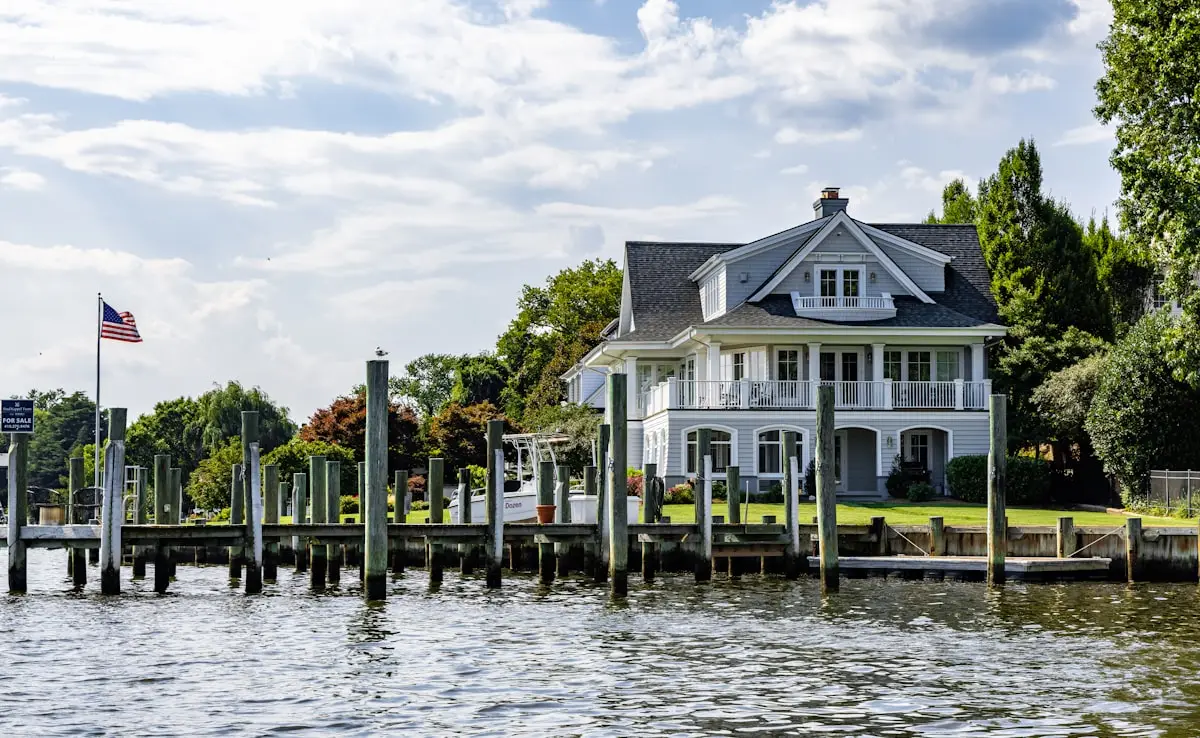
A weekend house on the shoreline is underwritten as a different risk than the house you live in. How vacancy provisions, freeze warranties, named-storm deductibles, flood, rental use and umbrella coordination actually work.
A Second Home Is Not a Smaller Version of Your First
A shoreline cottage or a lake house in the northwest hills is rarely just one more line on the insurance program. A secondary or seasonal dwelling is usually its own policy, on its own terms, underwritten against concerns that never arise on a primary residence.
Start with a definition most homeowners never read. A standard homeowners form is built around the residence premises — the dwelling where you reside, shown as such on the declarations page. A house you occupy ten weekends a year does not fit that description, which is why second homes are generally written separately: a seasonal or secondary dwelling policy, sometimes a dwelling fire form, sometimes a scheduled location on a private-client program.
Liability follows the same logic. Homeowners liability applies at an insured location, which standard forms define to include other premises you use as a residence only if that location is shown in the declarations. The same forms exclude injuries arising out of a premises you own that is not an insured location. A second home nobody reported can fall into a gap on both sides of the policy. Underwriters also weigh long unattended stretches, distance to a responding fire company, wind and surge, and everyone else with a key.
Vacancy and Unoccupancy: The Words That Decide Claims
These are not synonyms, and the distinction is where second-home claims get denied. A dwelling is generally unoccupied when nobody is living there but the furnishings and the intent to return remain, and vacant when it is empty of both occupants and contents. Standard homeowners forms suspend certain coverages once a dwelling has been vacant beyond a stated number of consecutive days immediately before the loss — vandalism and malicious mischief, and glass breakage, are the usual casualties. Sixty consecutive days is the threshold in the widely used industry form, but proprietary forms vary, so read your own.
A policy priced for a seasonal home contemplates the empty months; one written as though the house were occupied year-round may not. Describe the real pattern of use — closed November through April, a caretaker who checks it weekly — and let the coverage be built around it. If the house will sit genuinely empty during a sale or an estate settlement, ask about a vacancy permit endorsement first.
Freeze Protection Is a Condition of Coverage, Not a Suggestion
This is the most commonly triggered denial on Connecticut second homes, and the language is blunt. Standard forms cover freezing of a plumbing, heating, air conditioning or automatic fire protective sprinkler system, or of a household appliance, only if you used reasonable care to either maintain heat in the building or shut off the water supply and drain all systems and appliances of water. Do neither, and a burst pipe that floods three floors is not a covered loss.
Two wrinkles matter. If the building has an automatic fire protective sprinkler system, standard forms flip the requirement: you must continue the water supply and maintain heat. And the same forms exclude damage caused by freezing, thawing, or the pressure or weight of water or ice to fences, pavement, patios, swimming pools, footings, foundations, retaining walls, bulkheads, piers, wharves and docks.
A defensible routine: shut the water at the main, drain and blow out the lines, antifreeze in the traps, winterize irrigation and the pool, and either maintain heat with a monitored low-temperature sensor or document the shut-off. Many carriers now credit water-flow sensors and automatic shut-off valves. Keep the invoice — proof of reasonable care is what settles the argument.
Wind, Named Storms and Percentage Deductibles
Coastal policies commonly replace the flat deductible with a percentage of the dwelling limit when a qualifying storm causes the damage, and Connecticut regulates exactly when that percentage may be applied. See Connecticut's hurricane deductible explained for the trigger, the percentage caps, and how the 2,600-foot shoreline rule works.
Flood Is a Separate Policy
No homeowners form covers flood. Surge, tidal flooding and rising water are excluded everywhere, and the only response is a separate federal or private policy. Three points owners miss:
- There is generally a waiting period. Federal flood policies typically do not take effect for thirty days, with narrow exceptions tied to loan closings and map revisions. You cannot buy it when the forecast turns.
- Federal limits are capped well below the reconstruction cost of most Connecticut waterfront homes, which is why an excess flood layer is usually the answer.
- Do not assume your flood zone. Maps get revised, and flooding regularly damages homes outside mapped high-risk areas. Look up your own parcel through FEMA's Flood Map Service Center.
Our overview of Connecticut flood insurance covers how zones, elevation and limits interact. Owners in shoreline towns such as Old Lyme should review wind and flood together, because one storm can produce two claims with two deductibles.
Renting It Out Turns a Home Into a Business Exposure
A few weeks of rental income can quietly move the property out of its coverage. Standard homeowners liability excludes injury and damage arising out of a business, defined broadly enough to reach activities engaged in for money. There is an exception for renting or holding for rental an insured location on an occasional basis if used only as a residence — but "occasional" is undefined, and a property booked most weekends through a platform is unlikely to look occasional to a claims examiner.
Short-term rental also imports risks the form was never priced for: injuries to paying guests, theft of your contents, damage by renters, lost rental income. Platform host protections vary, commonly sit excess of your own insurance, and carry their own exclusions.
Structure follows frequency. Occasional family use may need nothing; regular seasonal renting usually calls for a home-sharing endorsement or a rental dwelling policy; back-to-back bookings with cleaning crews is a commercial exposure. Town rules apply independently of your insurance.
Guests, Caretakers and the People Who Work at the House
Second homes concentrate liability: pools, docks, stairs to the beach, paddleboards, utility vehicles, and guests who do not know the property. Adult children hosting friends while the owners are away is worth raising with your agent.
Ready to Secure Your Coverage?
Get personalized insurance recommendations from our expert agents. Schedule your consultation today.
📅 Schedule a ConsultationHousehold help is the exposure owners underestimate. A caretaker who opens and closes the house, a property manager or a housekeeper may be your employee rather than an independent contractor, and that classification drives everything. Connecticut treats domestic workers in a private dwelling differently: the workers' compensation statute reaches them only once they regularly work more than a threshold number of hours per week, twenty-six being the figure the state uses. Below that line a compulsory coverage requirement may not attach, which does not mean the exposure disappears. Confirm your obligation with the Workers' Compensation Commission or your attorney.
Coordinating the Second Home Into Your Umbrella
An umbrella sits above your underlying policies, and only above what it knows about. Carriers commonly require every owned residence, watercraft and vehicle to be scheduled, with stated minimum underlying limits on each. Two failure modes recur: the property was never added to the schedule, or the underlying policy — often placed elsewhere for coastal capacity — carries a lower liability limit than the umbrella requires. That gap is yours to fund before the umbrella responds.
Rental use, a dock, a pool and recreational vehicles kept there should all be disclosed, since many umbrella forms restrict property rented to others unless endorsed. Our page on umbrella and excess liability coverage explains how the layers line up.
What To Do Next
With both declarations pages side by side:
- Confirm the second home appears by address on the policy meant to cover it, and on the umbrella schedule.
- Compare the vacancy provision's day threshold to the longest stretch the house sits empty.
- Read the freezing provision, decide which path you take, and document what you do each fall.
- Locate the windstorm or hurricane deductible, calculate the real dollar amount, and confirm the trigger.
- Verify flood coverage exists, check the limit against reconstruction cost, and look up the parcel yourself.
- Tell your agent how often the house is rented, and confirm underlying limits meet what the umbrella requires.
Most second-home problems are structural rather than accidental: a house described one way and used another. If yours has changed how it is used, been renovated, or moved carriers, review it. Our Connecticut homeowners insurance overview covers the primary residence side of the same program; for a second set of eyes on how the two fit together, contact New England Insurance.
Start Your Coverage Review
Share your risk picture and a licensed advisor will design coverage tailored to your specific needs.