Understanding Your Connecticut Auto Insurance Policy
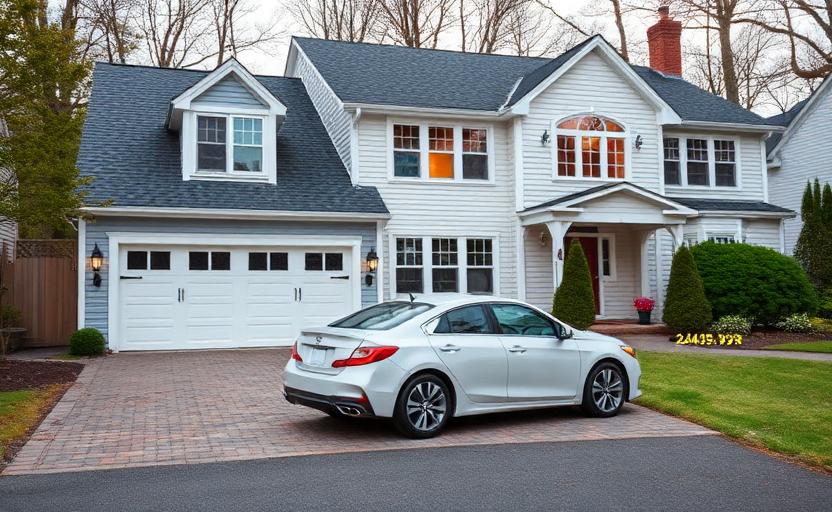
Decode your Connecticut auto insurance policy and understand what coverage you have, what you need, and how to save money.
Connecticut Auto Insurance Basics
Connecticut requires all drivers to carry minimum auto insurance coverage. Understanding your policy helps you make informed decisions about your protection. For households with real assets it matters more: an auto claim is the most likely way a family ends up personally named in a lawsuit exceeding its insurance.
Required Connecticut Auto Insurance Coverage
- Bodily Injury Liability: $25,000 per person, $50,000 per accident
- Property Damage Liability: $25,000 per accident
- Uninsured Motorist: $25,000 per person, $50,000 per accident
- Underinsured Motorist: $25,000 per person, $50,000 per accident
These are the state's compulsory floor, and confirming current limits at renewal is sound practice. They were never designed to make an injured party whole, and they have not kept pace with medical costs or vehicle values. For a household with home equity, retirement accounts, or future earnings worth protecting, carrying minimums is less a coverage decision than a decision to self-insure everything above them.
Reading Bodily Injury and Property Damage Limits
Bodily injury liability is written as split limits. The first figure is the most the policy pays for any one injured person; the second is the most it pays for all injuries in a single accident. One serious injury, a surgery, and time out of work can exhaust a $25,000 per-person limit before the medical file is complete. Once the limit is paid the claim does not end; it continues against you personally.
Property damage liability pays for damage you cause to others' property, most often a vehicle, but also guardrails and storefronts. As vehicle prices have risen, a $25,000 limit can be consumed by a single late-model SUV. Many carriers offer a combined single limit as an alternative, pooling bodily injury and property damage into one figure available to any combination of claims, which often responds better in a severe accident.
Review your limits against your full picture with Connecticut auto insurance built for your household rather than for the statute.
Uninsured and Underinsured Motorist: The Coverage That Usually Matters Most
Liability coverage protects other people from you. Uninsured and underinsured motorist coverage, UM and UIM, protects your own family from everyone else, and in a serious loss it more often determines the outcome.
Your liability limit is a choice you control. The at-fault driver's limit is not. If a driver carrying minimum limits catastrophically injures a member of your household, recovery from that policy is capped at their limit, and the difference falls to your UM/UIM coverage or to your family. UM responds when the at-fault driver has no insurance or cannot be identified; UIM responds when they have insurance but not enough. High liability limits paired with low UM/UIM is a common mismatch, which is why sound practice is generally to match the two.
Stacking and Conversion Coverage in Connecticut
Stacking means combining UM/UIM limits across multiple vehicles or policies into a larger pool. Connecticut is generally treated as an anti-stacking state, so limits from several vehicles or policies typically cannot simply be added together. A household should not assume that insuring four cars produces four times the protection.
Connecticut law does require insurers writing auto liability in the state to offer underinsured motorist conversion coverage for an additional premium. Under standard UIM, amounts paid by the at-fault driver's insurer commonly reduce what your own UIM pays; conversion coverage changes that arithmetic so those payments do not offset your benefit the same way. Because forms vary, ask whether your policy carries the conversion or the standard form, and confirm it on the declarations page.
Optional but Recommended Coverage
- Comprehensive: Covers theft, vandalism, weather damage
- Collision: Covers damage from accidents
- Medical Payments: Covers medical expenses regardless of fault
- Rental Reimbursement and Roadside Assistance: Practical add-ons that pay for a replacement vehicle and towing while yours is repaired
One point of frequent confusion: Connecticut is an at-fault state and does not use a no-fault system, so Personal Injury Protection is not part of a Connecticut auto policy the way it is in neighboring no-fault states. Medical Payments coverage is the Connecticut analogue for immediate medical costs regardless of fault, and it is the one to ask about if that is the gap you are trying to close.
Collision handles impact, with another vehicle or a fixed object, and typically applies regardless of fault. Comprehensive handles nearly everything else that reaches a car without a collision: theft, vandalism, fire, falling limbs, flooding, and animal strikes, which in Connecticut is a genuine seasonal exposure. Glass is usually handled under comprehensive, often with a reduced deductible.
Medical payments pays medical expenses for you and your passengers without regard to fault, useful while liability is still being sorted out. Broader medical and wage benefit options are offered by some carriers; ask how they coordinate with your health plan.
Deductible Strategy
Deductibles apply to collision and comprehensive, not to liability or UM/UIM. The right deductible reflects the household's tolerance for a single out-of-pocket event, not the largest available premium saving. For families with liquidity, raising physical damage deductibles is often the most efficient trade in the policy, since the savings can be redirected into the limits that address catastrophic exposure. On older vehicles, once value approaches the deductible, physical damage delivers little.
Rental Reimbursement, Towing, and Loan or Lease Gap
Rental reimbursement pays for a substitute vehicle while yours is repaired after a covered loss, written with both a daily limit and a maximum number of days. Given how long parts and body shop scheduling take, the daily limit matters most; one set years ago may not cover a comparable vehicle today.
Loan or lease gap coverage addresses the difference between what you owe and what the vehicle is worth when totaled, since physical damage pays actual cash value, which on a financed vehicle can sit well below the loan balance. Lease agreements commonly specify required liability limits and obligate the lessee for the remaining balance, so confirm the policy satisfies the insurance clause before delivery.
Who Is Actually Covered: Permissive Use and Household Members
Auto policies define insured persons more broadly than most owners assume. Coverage generally extends to someone driving your vehicle with your permission, the concept known as permissive use, so lending a car generally lends your policy along with it, and your limits stand first in line.
Ready to Secure Your Coverage?
Get personalized insurance recommendations from our expert agents. Schedule your consultation today.
📅 Schedule a ConsultationThe other definition that matters is the resident relative. Most policies extend coverage to relatives residing in your household, and correspondingly expect licensed household drivers to be disclosed and rated. This is where quiet gaps develop: an adult child moving home, a parent moving in, or a student whose residency is ambiguous. Report changes in household composition when they happen.
Teen and Student Drivers
Adding a young driver is the point at which most families should revisit limits rather than simply add a name. Inexperience raises both frequency and severity, and the assets exposed are the parents'. Steps commonly available include confirming good student and driver training credits, and asking how a student attending school without a vehicle may be rated. Vehicle assignment matters too, since the car a young driver primarily operates typically drives the rating.
How Auto Limits Interact With a Personal Umbrella
A personal umbrella provides liability limits above your auto and homeowners policies, the most direct way to align coverage with a substantial balance sheet. It is excess coverage, which produces a requirement people consistently overlook: the umbrella carrier specifies minimum underlying limits on each policy beneath it, and generally responds only once those limits are satisfied.
If your auto liability sits below the required underlying limit, the shortfall is yours, and a renewal that quietly reduces auto limits can open that gap unnoticed. Ask whether the umbrella can provide excess UM/UIM, since not every carrier offers it and it is often the most valuable optional feature available to a family. Confirm too that every vehicle, residence, and young driver is scheduled consistently across the underlying policies, because an unscheduled exposure is a common reason an umbrella declines to respond. Reviewing personal umbrella coverage alongside your auto limits is the only way to confirm the two line up.
Factors Affecting Your Rates in Connecticut
- Driving record and experience
- Vehicle make, model, and age
- Location and garaging address
- Credit score (where permitted)
- Annual mileage
Garaging address is the factor most often reported incorrectly. Rating follows where the vehicle is principally kept, which is not always where the bill is sent. A vehicle garaged in Bridgeport and one kept at a second residence elsewhere in Fairfield County are rated on their actual locations, and a stale address is both a pricing and a claim problem. The same applies to use classification: a vehicle described as pleasure use but driven daily for business is misdescribed.
Ready to review your auto insurance? Contact our Connecticut agents to walk through your limits, your UM/UIM structure, and how they coordinate with your umbrella.
Start Your Coverage Review
Share your risk picture and a licensed advisor will design coverage tailored to your specific needs.