Commercial Insurance for Connecticut Restaurants: Essential Coverage Guide
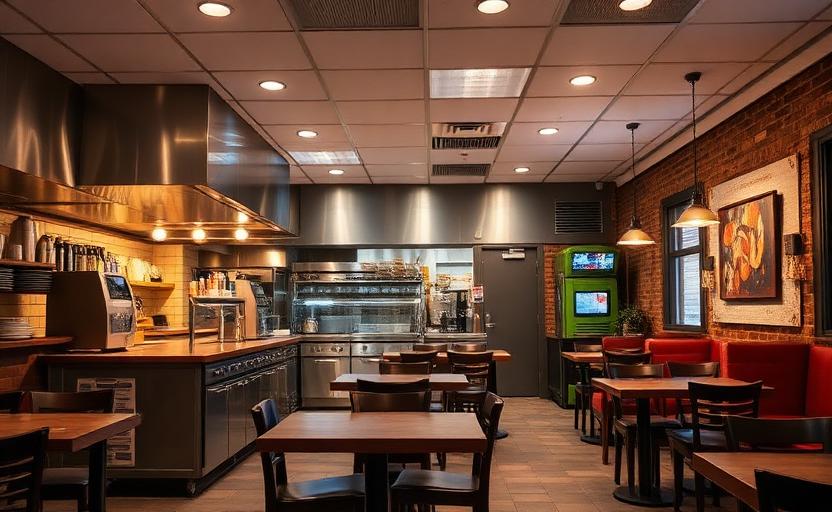
Connecticut restaurant owners need specialized insurance coverage. Learn about essential policies to protect your food service business.
Connecticut Restaurant Insurance Essentials
Operating a restaurant in Connecticut involves unique risks that require specialized insurance coverage. From kitchen fires to foodborne illness claims, proper protection is crucial. Restaurants combine exposures most businesses face one at a time: an industrial kitchen, perishable inventory, a high-turnover workforce, alcohol service, and card payments.
Required Connecticut Restaurant Insurance
- Workers' Compensation: Mandatory for all employees
- Commercial Auto: For delivery vehicles
- Liquor Liability: If serving alcohol (required by law)
General Liability and Slip-and-Fall Exposure
General liability responds when a third party is injured or their property is damaged in connection with your premises or operations. In food service the dominant driver is the ordinary slip, trip, and fall: a wet floor near a service station, an entry vestibule during a winter storm, a poorly lit step between dining levels.
The policy carries both a per-occurrence limit and an annual aggregate, and a busy season with several claims can erode the aggregate before the year ends. Defense costs are typically paid outside the limit, which matters because many of these claims cost more to defend than to settle. A documented floor-safety program, with footwear rules, mat maintenance, and a dated inspection log, is both your premium argument and the evidence that defends the claim.
Liquor Liability and Dram Shop Concepts
General liability forms for hospitality risks commonly exclude liability arising from the service of alcohol, which is why liquor liability is written separately. Broadly, dram shop principles allow a third party injured by an intoxicated patron after they leave to bring a claim against the establishment that served the alcohol. Damages can be severe because these claims often involve serious motor vehicle injuries. The limit therefore deserves real attention rather than a default selection, and you should confirm whether your umbrella sits over the liquor policy or excludes liquor entirely, because that varies. Carriers look for documented server training and incident logs.
Essential Restaurant Coverage
- General Liability: Customer injuries, property damage
- Product Liability: Foodborne illness protection
- Property Insurance: Building, equipment, inventory
- Business Interruption: Lost income from closures
Protect your restaurant with specialized retail and restaurant insurance.
Property, Including Tenant Improvements and Betterments
If you lease, which most restaurants do, the critical property item is tenant improvements and betterments: the build-out you paid for and left permanently attached to someone else's building. Hoods and ventilation, fire suppression, grease interceptors, walk-in boxes, bar millwork, and utility upgrades are frequently the largest single value on the schedule, and they are routinely underinsured because operators treat them as the landlord's building rather than their own asset.
Business personal property covers cooking equipment, refrigeration, furniture, smallwares, point-of-sale hardware, and inventory, and should be valued at current replacement cost rather than depreciated book value. Read the lease alongside the policy; it determines who insures and rebuilds what.
Equipment Breakdown for Refrigeration and Cooking Equipment
Property policies respond to external causes such as fire, wind, and water. They generally do not respond when equipment fails from the inside: a compressor burnout in a walk-in, an electrical arc in a panel, a motor failure, or a boiler or HVAC failure. Equipment breakdown coverage fills that gap. Better forms extend beyond the repair to spoilage resulting from the breakdown, expediting expense to install replacement equipment faster, and business income lost while the equipment is down.
Spoilage Coverage and Its Triggers
With spoilage, the trigger language decides whether you collect. Coverage generally responds to loss of perishable stock caused by a change in temperature or humidity. Common triggers include mechanical breakdown of refrigeration, contamination by refrigerant, and interruption of utility power. The last is where restaurants get caught: many forms cover an off-premises power interruption only when the utility equipment itself suffers physical damage from a covered cause, and some exclude overhead transmission lines, which is exactly what a Connecticut ice storm takes down.
Business Income With an Adequate Restoration Period
Business income replaces the profit and continuing expenses lost while operations are suspended after a covered property loss. The limit is only half the analysis; the other half is the period of restoration, meaning how long coverage continues. Restaurants rebuild slowly. Permitting, health department sign-off, and custom equipment lead times routinely stretch a serious fire into many months, and traffic does not return to prior levels the day the doors reopen. An extended period of indemnity endorsement continues coverage for a defined period after reopening, and it addresses the most common shortfall in restaurant claims.
Workers' Compensation and Kitchen Injury Exposure
A commercial kitchen concentrates burn, laceration, slip, and strain exposures in a hot, fast, wet environment, often staffed by newly hired employees. Grease burns, knife and slicer lacerations, falls on wet floors, and lifting injuries make up most claims. Workers' compensation pays medical costs and lost wages regardless of fault and provides employers liability coverage for related suits outside the compensation system. Classify payroll correctly, since misclassification distorts premium and creates audit problems. Cut-resistant gloves, hot-oil procedures, and a clear return-to-work process reduce both claim frequency and the experience modification that drives future premium.
Commercial Auto, Delivery, and Hired and Non-Owned
Vehicles the business owns belong on a commercial auto policy with liability limits sized to a serious highway accident rather than to the value of the vehicle. The larger and more frequently overlooked exposure is employees using their own cars for deliveries, catering runs, or supply pickups. When an employee causes an accident while working, the business is commonly brought into the claim, and the employee's personal auto policy may not respond to business use at all. Hired and non-owned auto liability covers that exposure. It does not repair the employee's car, and it is no substitute for checking driving records.
Cyber and Payment Card Exposure
A restaurant is a payment processor with a kitchen attached. Card data flows through point-of-sale terminals, online ordering, reservation platforms, and delivery integrations. Common losses are not exotic: compromised point-of-sale systems, ransomware that disables ordering and payment, and funds transfer fraud initiated by an email appearing to come from a supplier or an owner. Evaluate cyber policies by component, not headline limit: breach response and forensics, notification costs, business interruption from a systems outage, extortion coverage, funds transfer fraud, and specifically payment card liabilities, meaning the assessments, fines, and reissuance costs a processor can pass through under your merchant agreement.
Explore cyber liability coverage and how it applies to card-accepting businesses.
Employment Practices Liability for a High-Turnover Workforce
Food service runs on a workforce that turns over quickly and is scheduled irregularly. That profile produces wrongful termination, discrimination, retaliation, harassment, and accommodation claims. General liability does not cover these, and neither does workers' compensation. Employment practices liability does, and it pays defense costs, which usually dominate the expense because even claims without merit require counsel. Watch the wage and hour question specifically: claims involving tip credits, tip pooling, off-the-clock work, and overtime are common in restaurants and are typically excluded or offered only as a limited defense-cost sublimit.
Assault and Battery Exclusions on Hospitality Risks
This is the exclusion most likely to be overlooked and most likely to matter. Many carriers writing bars, nightclubs, and restaurants with late-night or significant alcohol service attach an assault and battery exclusion, or offer the coverage only at a sublimit below the policy's main limit. The exclusion typically removes claims arising from an altercation on the premises, including allegations that the establishment was negligent in hiring, training, or supervising staff. For any bar or late-night operation, that is a genuine gap. Read the endorsement list on every quote and renewal, and ask directly whether assault and battery is excluded, sublimited, or covered in full.
Connecticut-Specific Restaurant Risks
- Seasonal Tourism: Fluctuating revenue needs
- Historic Buildings: Older kitchen systems
- Coastal Locations: Storm damage risks
- Local Regulations: Health department requirements
Seasonal swings argue for setting income limits on peak-season figures rather than an annual average. Older buildings raise the cost of rebuilding to current code. Coastal locations may carry separate windstorm deductibles and a storm surge exposure that property policies exclude.
Cost-Saving Strategies
- Bundle policies for discounts
- Implement safety training programs
- Install security and fire suppression systems
- Regular equipment maintenance
Keep dated records of hood cleaning, suppression inspections, refrigeration service, and server training. Underwriters price what they can verify.
Ready to Secure Your Coverage?
Get personalized insurance recommendations from our expert agents. Schedule your consultation today.
📅 Schedule a ConsultationNeed comprehensive business protection? Explore commercial insurance solutions for Connecticut businesses.
Ready to review your restaurant's program? Contact our Bridgeport commercial insurance team.
Start Your Coverage Review
Share your risk picture and a licensed advisor will design coverage tailored to your specific needs.